Below are some of our favorite pieces of equipment for filming and photography, along with the reasons we chose each one to help you make a more informed purchasing decision.
We currently own 2 Sony cameras, Sony A7IV and Sony A7RV, for which we share the lenses that we have: Sony 35mm GM, Sony 85 mm GM, Sony 135 mm GM, Sony 100-400 mm GM and Sony 24-70 mm GM.
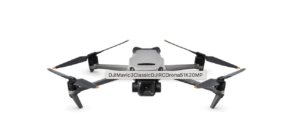
We also have a DJI Mavic 3 Classic drone.
SONY A 7IV
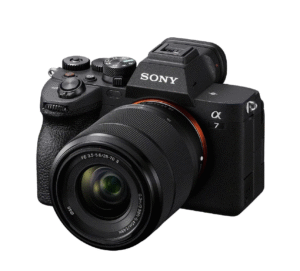
This is the main camera Lutz uses for the majority of the videos, the main reason being the hybrid capabilities of the camera, offering a good compromise between shooting quality videos and grabbing quick raw images that can be later tweaked in post production.
SONY A7RV
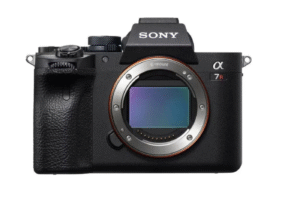
It is Andrada`s camera and our newest acquisition. We preferred it because it is the go to camera for taking best possible quality images due to its highest megapixel sensor – 61 MP. Such a high resolution is also an advantage for the crop sensor function, that I use a lot, especially with prime lenses. Sony A1 remains the GOAT for its incredible speed and capabilities but for our needs, the A7RV was the best compromise between quality and price.
The only downside would be just its slightly noisier effect in low light, compared to our previous Sony A7III, due to the high resolution.
SONY 35 mm F1.4 GM
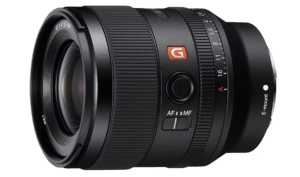
This lens together with the 85 mm are the go to lenses for the majority of our travels – landscape, city breaks, portraits etc. The aperture of 1.4 provides such a gorgeous image and its relatively light weight ( 524 g ) makes it perfect to either keep it on the camera all day long or just carry it in a small bag .
SONY 85 mm GM
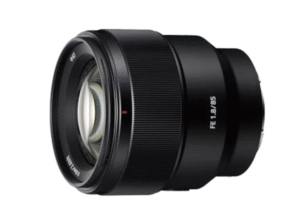
We love it because it takes hardly any room in the camera bag. It is also the lightest lens that we have – only 371 g – making it super easy to keep it on the camera all day long.
The 85 mm range is great for portraits but it is also a good compromise for street photography and even landscapes. Also, the price/ quality ratio is really good.
SONY 100- 400 mm GM
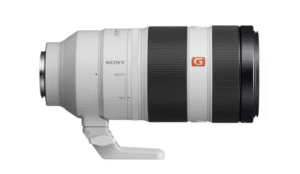
We decided to purchase this lens just before our safari trip to Botswana. Although it is not the greatest zoom lens on the market, we considered it as the best compromise in between size, weight and focal length.
The image quality is pretty good and the zoom range makes it pretty versatile as it can be used for landscape photography, as well.
Tip: on the Sony cameras, if you use the crop sensor function, it will provide an additional 1.5 x zoom.
SONY 135 mm GM
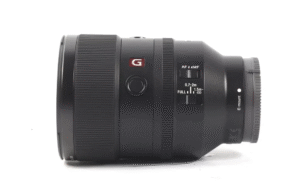
I think this was our favourite lens of all times. At least, until we dropped it on a street in San Francisco. 😱 But somehow, it still works. Although its is slightly bulky and heavy – 900 g, the quality of the images totally makes up for it. But that is the beauty of the prime lenses.
It is amazing for portraits but also for distant landscapes.
The biggest downside is it’s size, as it is quite heavy to carry it ( both in the bag or on the camera ).
SONY 24-70 mm GM
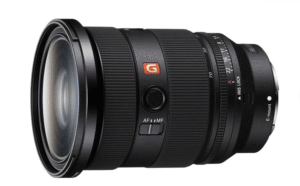
Stays almost all the time on Lutz`s camera as it covers most of the focal lengths usually used for videos. And, besides that, for a zoom lens, the quality is extraordinary.
DJI MAVIC 3 CLASSIC
This is the replacement that we got in 2023 for our previous DJI Mavic Air.
Although it is a bit bigger and heavier than any mini drone, this downside comes with the advantages of: better image quality ( 20 mp ), higher wind speed resistance ( 12 m/s ) and longer lasting batteries ( max flight time about 46 min ). And we wouldn’t change that for anything.
The weight of the drone is 895 g.
We currently have 2 batteries and that is pretty much all you need.
The biggest downside of any drone that is above 250 m ( and most of them are ) is the fact that it might be forbidden in certain countries, especially Arabic ones.